Lady Beetle Bite: Symptoms, Danger & Treatment (2026)
Most people are told ladybugs "don't bite," so a pinprick mark can be confusing. The truth: native ladybugs almost never bite, but the invasive Asian lady beetle does, especially when it crowds into homes each fall. The bite itself is minor — the thing actually worth watching for is an allergic reaction to the fluid it releases.
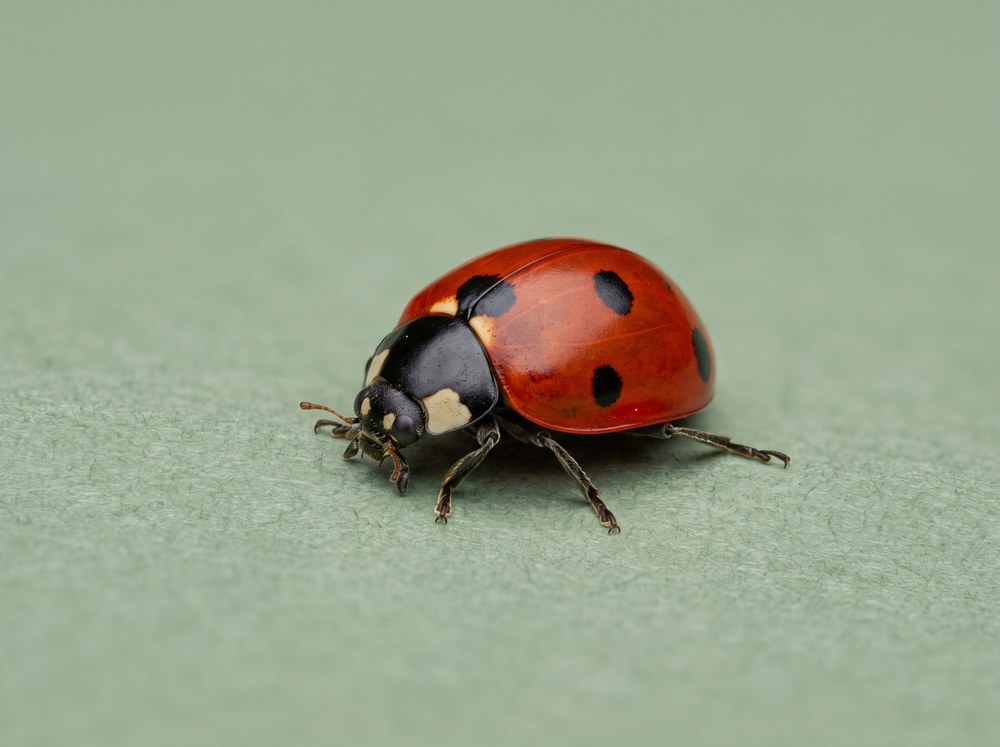
Is a lady beetle bite dangerous?
For nearly everyone, no. The overwhelming majority of lady beetle bites resolve on their own within a day or two, leaving nothing behind but a faded red mark. Lady beetles don't carry human diseases and their mandibles can't inject venom or feed on blood the way a mosquito or tick can.
The one genuine complication worth knowing about isn't the bite itself — it's an allergic response to the beetle's hemolymph, the yellowish fluid it secretes when disturbed. Extension entomologists have documented reactions ranging from mild contact dermatitis to rhinoconjunctivitis, asthma flare-ups, hives, and, rarely, angioedema. These reactions remain uncommon relative to the sheer number of people who encounter these beetles every fall.
People with existing asthma, insect allergies, or highly sensitive skin appear to be at somewhat higher risk of a noticeable reaction, though sensitivity can also show up in people with no allergy history at all. Children handling beetles and then touching their eyes or face are also more likely to notice irritation.
Bottom line: monitor a fresh bite for the first two to four hours. If redness stays put and starts fading, you're in the ordinary range. If hives spread beyond the bite site, your breathing feels tight, or your face or lips start swelling, that's your cue to stop watching and get medical care.
Should You See a Doctor?
A short decision tree based on CDC and Mayo Clinic guidance.
1 / 3 Is there swelling of your lips, tongue, throat, or face, or any trouble breathing?
2 / 3 Are you wheezing, coughing, or noticing hives on skin away from the bite site?
3 / 3 Has the redness or irritation been getting steadily worse for more than 48 hours?
What a lady beetle bite looks like
Most people don't feel anything at all in the moment — if there's any sensation, it's described as a faint pinch or nibble rather than sharp pain. That's a key difference from stinging insects, and it's why many people only notice the bite after the fact, when they spot a small mark on their skin.
The mark itself is typically a single, isolated red pinprick or a slightly raised bump, usually under a few millimeters across. There's rarely any blistering, and true ulceration doesn't happen — the beetle's mouthparts aren't built to break skin deeply. Mild redness can spread out a bit from the contact point over the first hour, then start to settle.
There's no signature "pattern" the way some bites have — no bull's-eye, no row of welts. If you want a closer visual reference for what these marks and the beetles themselves look like, Insectio's illustrated lady beetle identification guide with photos breaks down the color and spot variations that make identification tricky in the first place.
The most common misidentification is bed bugs, because both can show up as small red marks discovered after waking. The distinguishing clue is distribution: a lady beetle mark is usually solitary, while bed bug bites tend to appear in lines or clusters of three or more.
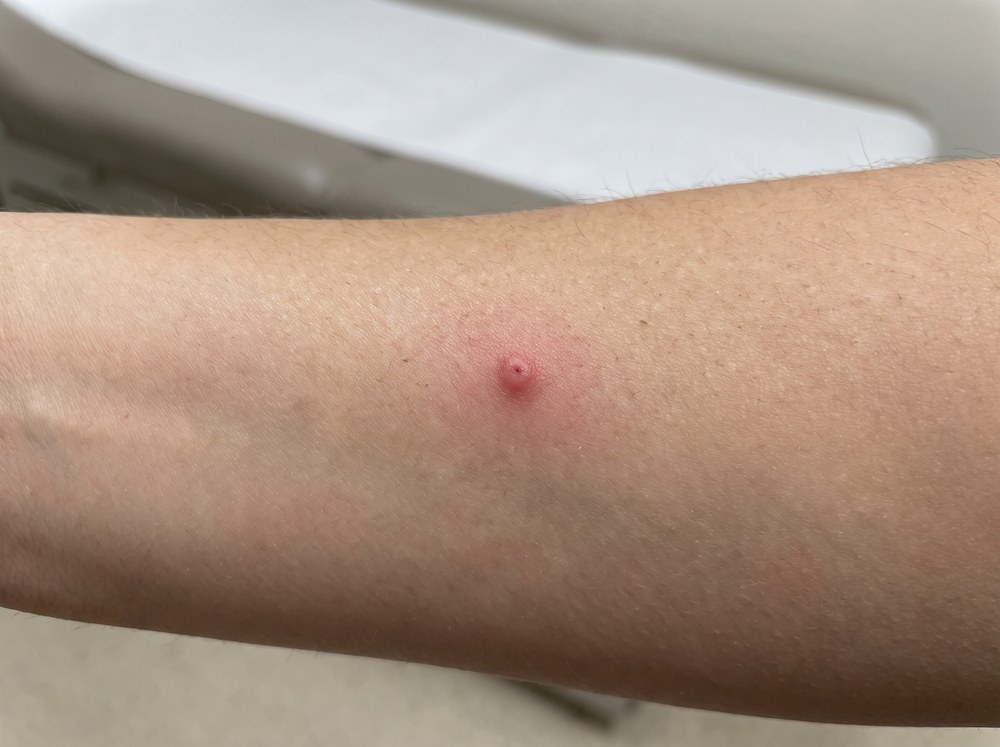
Wondering how serious yours is?
Check My SymptomsSymptom timeline: what to expect
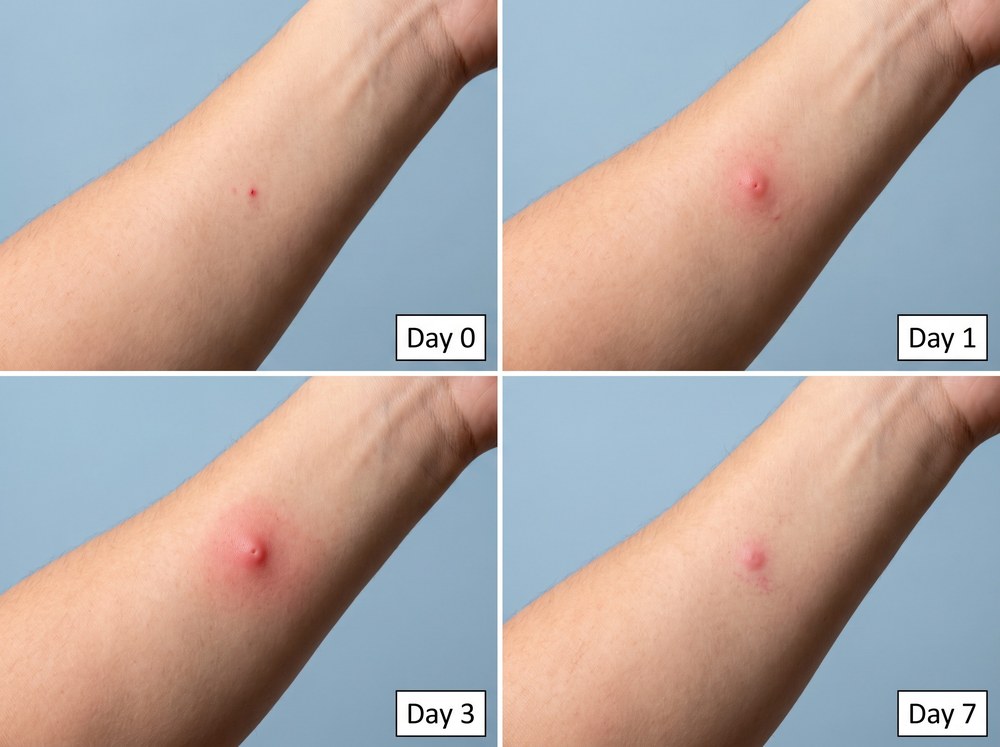
Hours 0–2. A faint pinch, then a small red mark. Most people notice nothing more than mild, localized redness that may itch slightly.
Hours 2–8. Redness typically stays confined to the bite site and may begin to fade. If an allergic response is going to show up, this window is often when early signs like itching elsewhere, sneezing, or watery eyes start.
Day 1–2. For the vast majority, the mark has faded to barely visible. Any lingering itch is usually mild and manageable with an over-the-counter cream.
Day 3–7. The bite should be fully resolved by now with no trace left. If the area is still red, swollen, or uncomfortable at this point — or if it's gotten worse rather than better — that's outside the normal course, and a medical evaluation is the right next step.
Bite Symptom Checker
Check every symptom you're currently experiencing. Get a plain-English risk read.
Treatment
Wash and elevate. Clean the bite with soap and water to rinse away any residual hemolymph and lower the odds of irritation. There's no venom to draw out, so there's no need to do anything beyond a basic wash.
Cool, don't warm. A cold compress for 10–15 minutes calms redness, itching, and any mild swelling. Heat isn't needed here and can make itching feel worse.
OTC support. An over-the-counter antihistamine or a hydrocortisone cream is usually enough for lingering itch. If you're not sure whether what bit you was actually a lady beetle, the BugKnow app lets you snap a photo to identify a lady beetle instantly before deciding on next steps.
Watch, don't wrap. Leave the mark uncovered so you can check it. If redness spreads past the original bite site, or hives show up somewhere else on your body, stop self-treating and seek care.
Wondering whether to head to urgent care?
Run the Decision TreePrevention
Sealing gaps around windows, doors, and siding before fall is the single most effective way to keep Asian lady beetles from crowding into your home in the first place. Vacuuming beetles that do get inside — rather than crushing them — avoids releasing the odor and fluid that trigger skin and respiratory reactions in the first place.
Outdoors, wearing long sleeves during peak fall swarming or when working near sunny, light-colored exterior walls reduces skin contact. If you've spotted more than a handful clustering indoors, a full inspection of entry points is warranted.
Take 30 seconds to check your bite now.
Start the Symptom CheckerWhich Bug Bit Me?
Not sure it was a lady beetle? Answer three questions and we'll narrow the list.
Still holding a blurry phone photo of the culprit? Bugidentifier.org can help you identify an insect from a picture in just a few seconds.
Frequently asked questions
Do ladybugs and Asian lady beetles actually bite humans? +−
Native ladybugs rarely bite, and when they do it feels like a faint pinch. The invasive Asian lady beetle (Harmonia axyridis) bites more readily, especially in fall and spring when large numbers move indoors. Their mandibles can pinch skin but are not designed to feed on blood, so bites are typically brief, mild, and do not require special medical treatment for most people.
What does a lady beetle bite look like? +−
A lady beetle bite usually appears as a single small red pinprick or slightly raised bump, often on exposed skin like the hands, neck, or arms. There is rarely a blister or ulcer. Mild surrounding redness can develop within an hour, but the mark is typically isolated rather than appearing in a row or cluster of multiple bites.
Why do Asian lady beetles suddenly bite in the fall? +−
In autumn, Asian lady beetles gather by the thousands on sunny, light-colored walls seeking a place to overwinter, and this crowding makes them more likely to end up on skin or trapped under clothing. When a beetle is pressed against skin, whether during yard work or while shifting in bed, it can respond with a defensive pinch rather than seeking a blood meal.
Can a lady beetle bite cause an allergic reaction? +−
Yes, though it is uncommon. The bigger concern with Asian lady beetles is not the bite itself but their hemolymph, a defensive fluid that can trigger allergic responses. Ohio State University Extension entomologists note that clinical reactions have included documented allergic reactions such as rhinoconjunctivitis, asthma flares, hives, and swelling in sensitive individuals, even in people with no prior insect allergies.
How do I tell a lady beetle bite from a bed bug bite? +−
Look at the pattern. A lady beetle mark is usually a single, isolated pinprick on exposed skin. Bed bug bites tend to appear as three or more raised, itchy welts in a line or tight cluster, often on skin covered while sleeping. If you're finding multiple welts in rows, a bed bug inspection is the more likely next step.
Is a lady beetle bite dangerous or can it make you seriously ill? +−
For the vast majority of people, a lady beetle bite is a harmless, self-limiting nuisance that fades within a day or two. Lady beetles don't carry human diseases and can't break the skin deeply. Serious illness from a bite alone is not something extension entomologists document; the rare complication is an allergic response to their secretions, not the pinch itself.
How long until I know if the reaction is serious? +−
Most people know within the first two hours whether they're dealing with simple local irritation or something more. Redness that stays confined to the bite site and starts fading within a day is reassuring. If swelling spreads, hives appear away from the site, or breathing feels tight at any point, treat that as a signal to seek care rather than waiting out the usual 24 to 48 hour window.
What should I do if I keep waking up with bite marks? +−
Check your bedding, curtains, and window frames for beetles, especially near light-colored walls or sunny exposures, since disturbed beetles can end up trapped against skin overnight. If the marks are single pinpricks rather than a lined cluster, a lady beetle is a reasonable suspect. Persistent marks in a repeating pattern warrant checking for bed bugs instead.
Ready to rule out something worse?
Run the Symptom Checker